Glossary
Geopolitical Impact of the Strait of Hormuz: Oil, LNG, Maritime Shipping, and the Global Economy
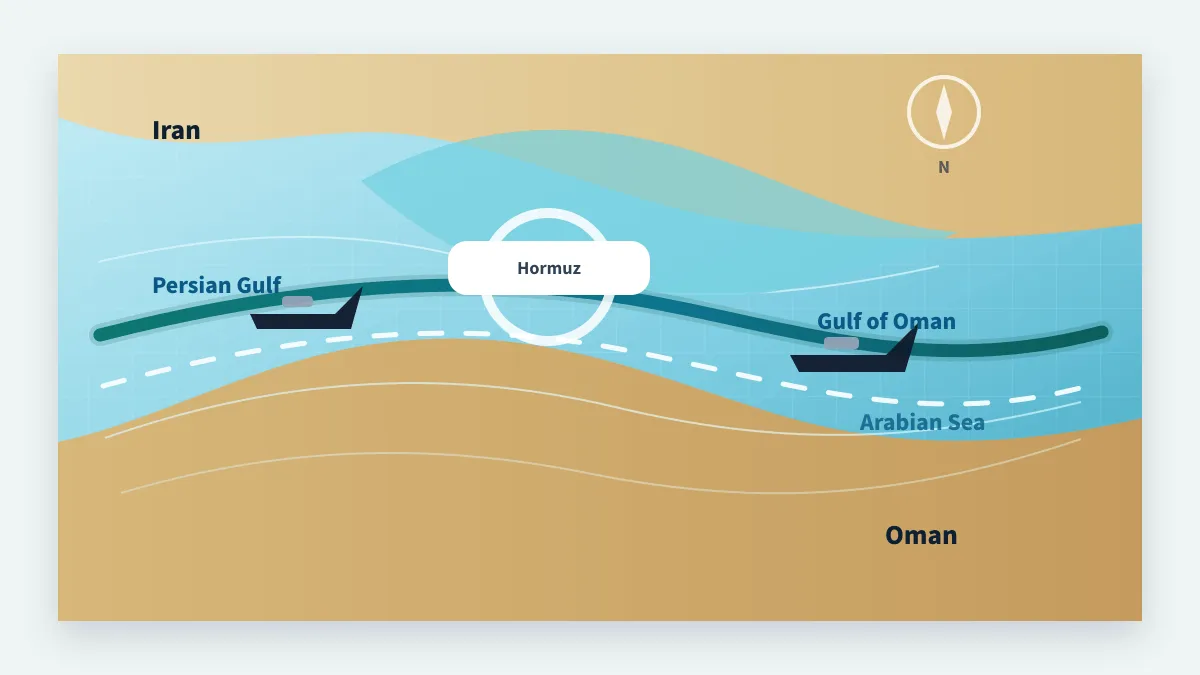
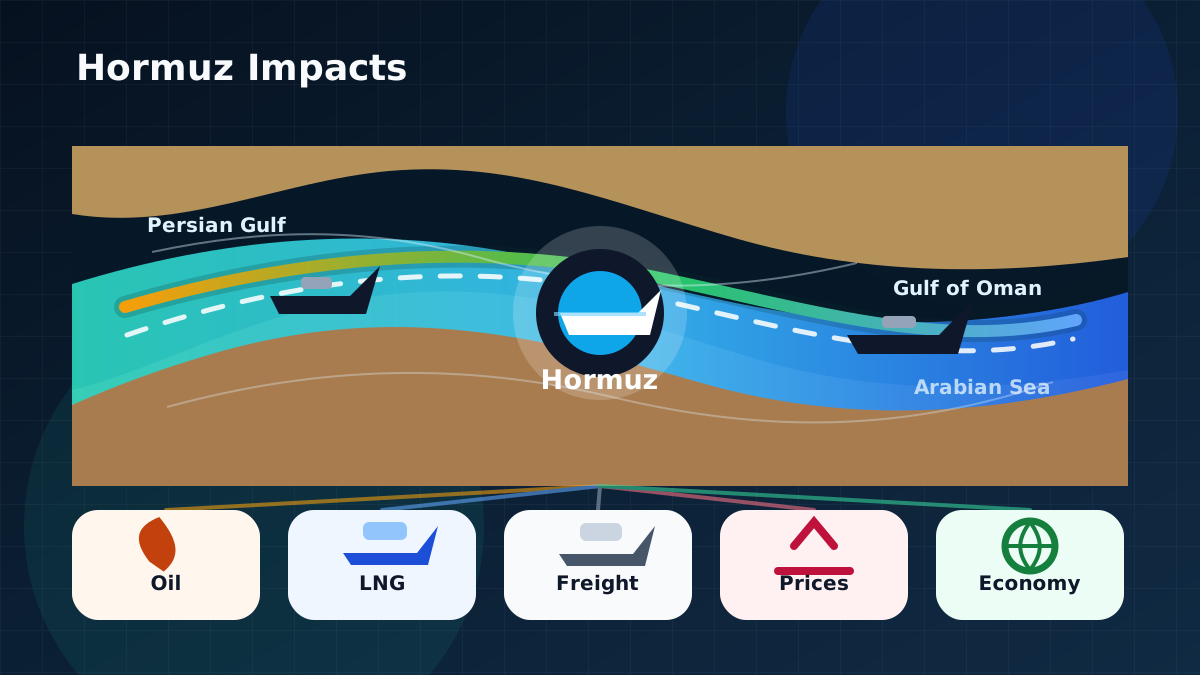
The Strait of Hormuz looks small on a map, but it plays an outsized role in global energy markets. It is the narrow sea passage through which much of the Persian Gulf’s crude oil, petroleum products, and LNG reaches the Indian Ocean and the wider world.
This is not a breaking-news summary. It is an evergreen explainer about why the Strait of Hormuz matters for oil prices, LNG markets, maritime shipping, insurance costs, inflation, and the global economy.
Quick summary
- The Strait of Hormuz is a narrow waterway between the Persian Gulf and the Gulf of Oman.
- It is a key route for Middle Eastern crude oil and LNG moving into global markets.
- Tension around the strait can affect oil prices, LNG prices, freight costs, insurance premiums, and inflation.
- Even regions that import little Gulf oil can feel the effect through global energy prices and shipping costs.
Key summary table
| Key factor | Meaning |
|---|---|
| Geography | A narrow maritime passage between Iran and Oman |
| Energy | A major route for crude oil, petroleum products, and LNG exports |
| Shipping | Connected to tanker, LNG carrier, and commercial vessel movements |
| Economy | Can affect oil, gas, freight, insurance, and consumer prices |
| Security | A central point in Middle East risk and global energy security |
Where is the Strait of Hormuz?
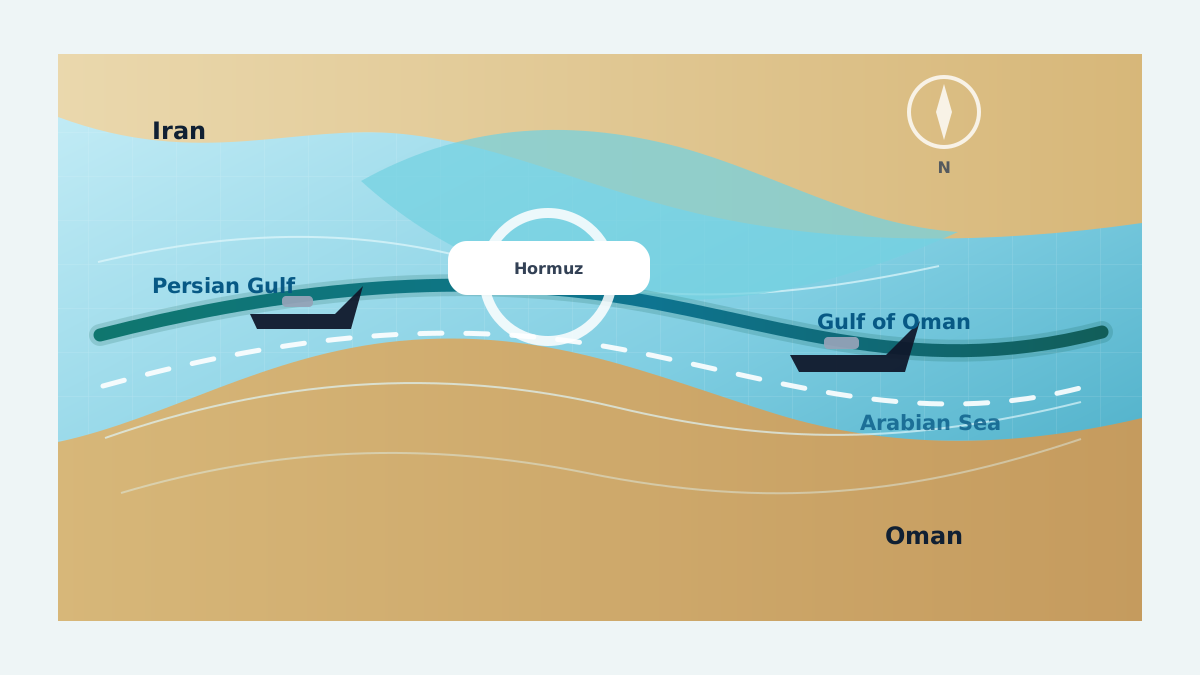
The Strait of Hormuz connects the Persian Gulf with the Gulf of Oman. Iran lies to the north, while Oman and waters near the United Arab Emirates lie to the south. From there, shipping lanes continue toward the Arabian Sea and the Indian Ocean.
Its importance comes from the concentration of energy exporters around it. Major oil producers and LNG exporters rely on ports inside or near the Persian Gulf. A large share of those cargoes must pass through this narrow route before reaching customers in Asia, Europe, and other markets.
| Country | Relationship with the strait |
|---|---|
| Iran | Borders the northern side of the strait and the Persian Gulf exit. |
| Oman | Borders the southern side and nearby Gulf of Oman waters. |
| Saudi Arabia | Has some pipeline alternatives, but major oil exports remain linked to seaborne routes. |
| United Arab Emirates | Has some bypass infrastructure toward Fujairah outside the strait. |
| Qatar | A major LNG exporter whose shipping routes rely heavily on the strait. |
| Kuwait | Oil exports are closely connected to Persian Gulf maritime routes. |
| Iraq | Southern oil exports depend strongly on Persian Gulf shipping access. |
Why is its geopolitical impact so large?
Geopolitics means looking at how geography shapes politics, security, trade, and economic outcomes. In the case of the Strait of Hormuz, the geography is simple: a narrow passage carries a large amount of energy trade. The consequences are not simple, because energy prices, shipping insurance, supply chains, and inflation expectations are all connected.
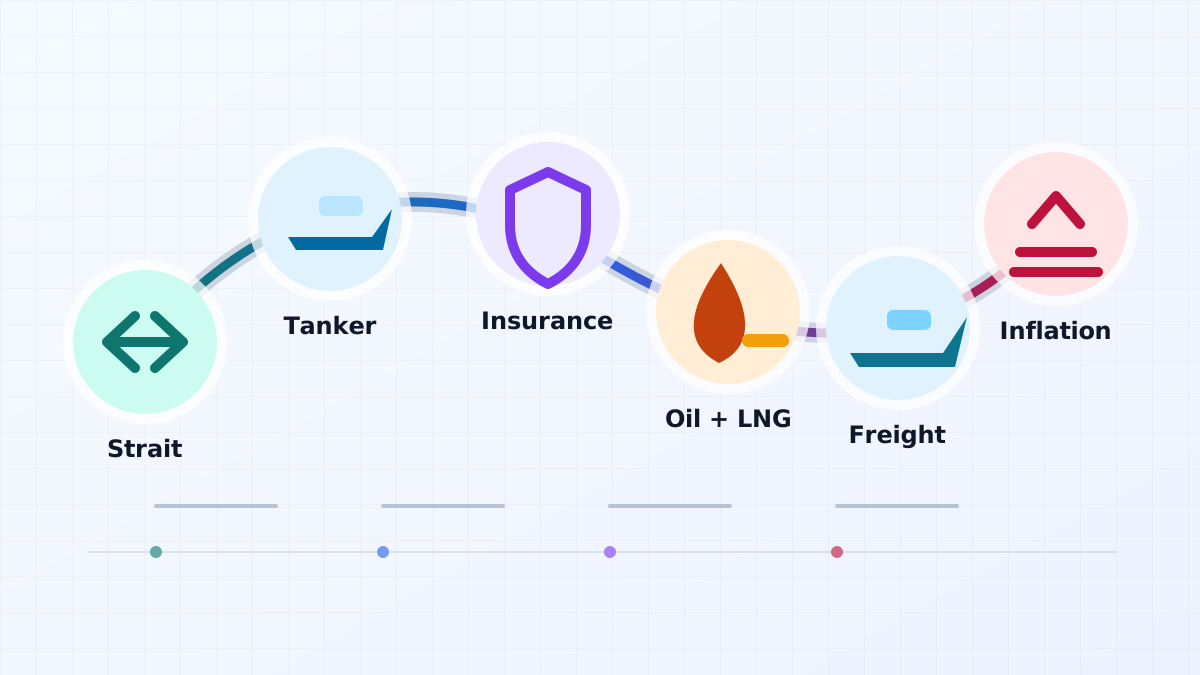
The chain often looks like this:
Narrow sea passage
→ concentrated energy flows
→ military and diplomatic tension
→ oil and LNG price volatility
→ higher freight and insurance costs
→ pressure on inflation and global growth
Markets can react even when traffic is not fully disrupted. Energy prices reflect current supply, but they also reflect the possibility of future supply problems. That extra pricing pressure is often described as a risk premium.
Why can the Strait of Hormuz affect oil prices?
The main reason is scale. The U.S. Energy Information Administration (EIA) describes the Strait of Hormuz as one of the world’s most important oil chokepoints. According to EIA, oil flows through the strait averaged about 20 million barrels per day in 2024, roughly 20% of global petroleum liquids consumption.
EIA also explains that the strait is linked to more than one-quarter of global seaborne oil trade. Because the volume is so large, traders watch not only actual supply disruptions but also the perceived probability of disruption.
The pricing pathway is usually:
Higher tension near the strait
→ greater tanker risk
→ higher marine insurance premiums
→ higher shipping costs
→ concern about supply interruption
→ upward pressure on crude prices
This does not mean prices must always rise. Inventories, demand, production policy, currency moves, and economic growth all matter. But the strait is important enough that it is regularly treated as a key oil-market risk factor.
Why does it matter for LNG markets?
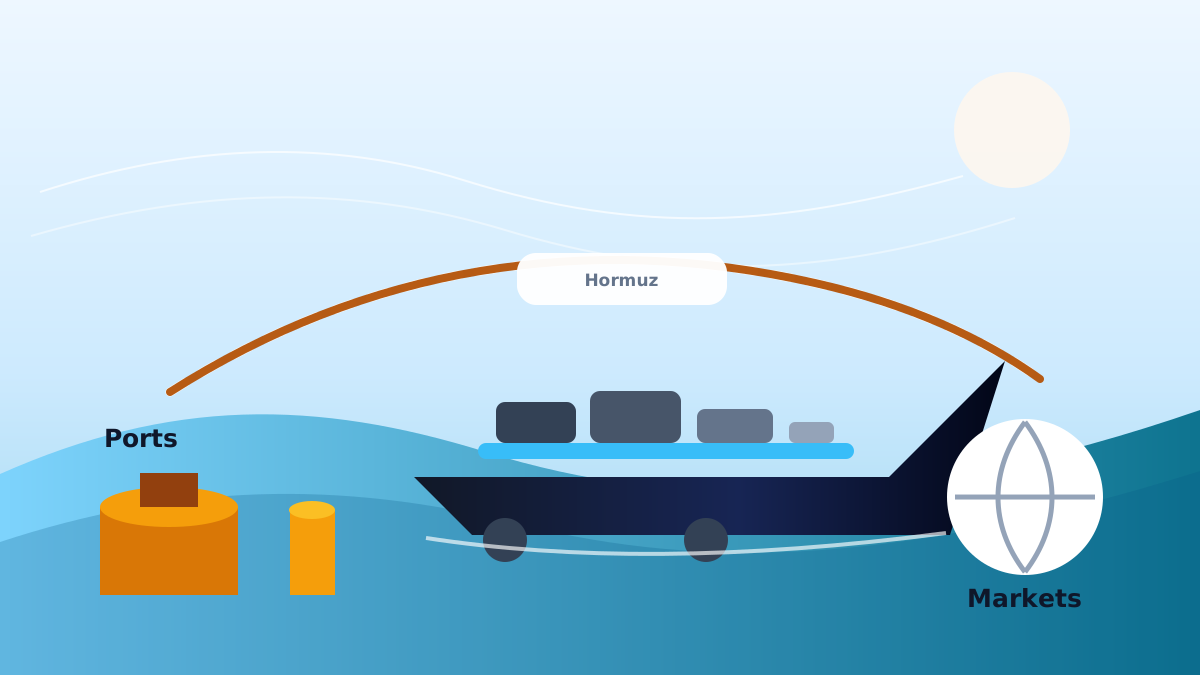
The Strait of Hormuz is also important for LNG. LNG stands for liquefied natural gas. It is natural gas cooled into liquid form so it takes up less space and can be transported by specialized ships over long distances.
The International Energy Agency (IEA) describes LNG moving through the Strait of Hormuz as a large share of global LNG trade. Qatar and the United Arab Emirates export significant LNG volumes through this route. IEA’s factsheet indicates that the strait is connected to around one-fifth of global LNG trade.
Not every LNG cargo passing through Hormuz is headed to the same region. Still, LNG is traded in a global market. If supply from one major source becomes uncertain, buyers in different regions may compete for alternative cargoes. That can affect gas prices, power costs, heating costs, and industrial input costs beyond the Gulf itself.
Maritime shipping and insurance costs also matter
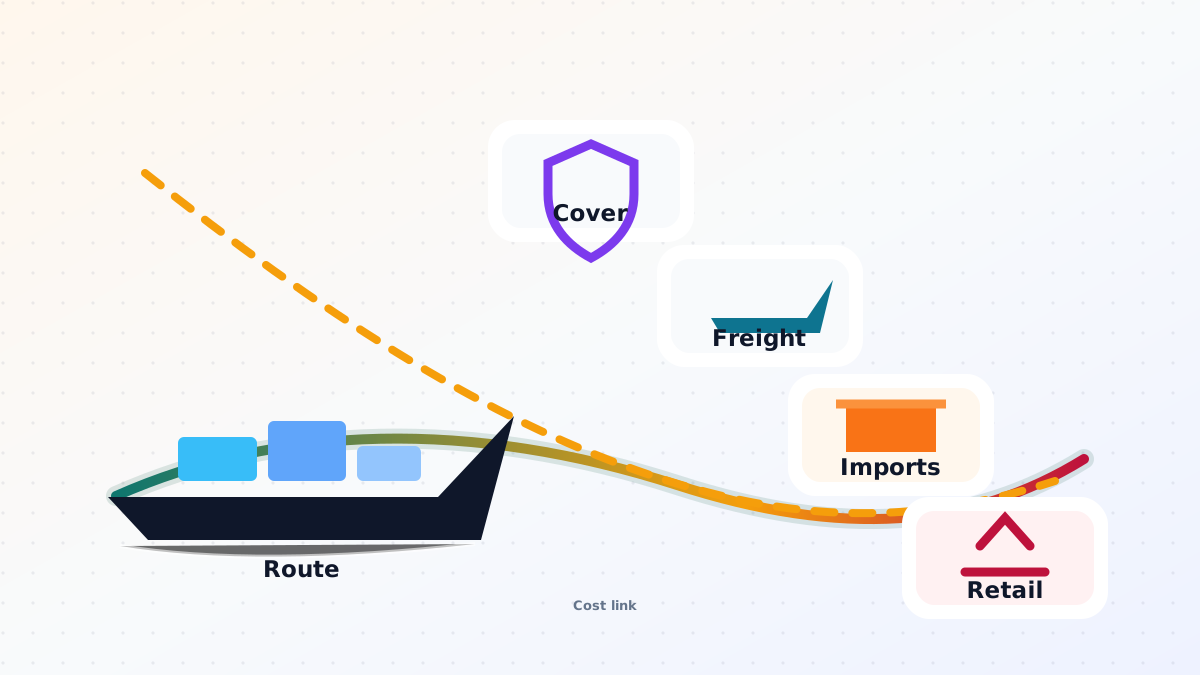
Shipping companies and insurers continuously assess route risk. If tension rises near a key waterway, ships may face higher insurance premiums, higher freight rates, higher fuel costs, or delay costs.
UNCTAD notes that disruption around the Strait of Hormuz can affect energy markets, maritime transport, insurance, supply chains, food prices, and cost-of-living pressure. When energy and freight costs rise at the same time, importers and manufacturers may face higher costs that can eventually reach consumers.
| Cost | Explanation |
|---|---|
| Marine insurance | The premium paid to cover vessels operating through riskier waters |
| Freight cost | The cost of moving goods by ship |
| Fuel cost | The energy cost of operating vessels |
| Delay cost | Extra cost from waiting, rerouting, or slower transit |
How can it affect the global economy?
Step 1: Energy prices rise
Uncertainty around crude oil and LNG supply can influence oil and natural gas prices. Energy is a basic cost for transport, manufacturing, heating, and electricity generation.
Step 2: Shipping costs rise
Higher insurance premiums and freight rates increase the cost of importing raw materials and exporting finished goods.
Step 3: Inflation pressure builds
Energy and transport costs can feed into food, consumer goods, air travel, parcel delivery, and manufacturing costs. Some effects appear quickly; others come with a delay.
Step 4: Growth can slow
If costs stay high, companies may reduce production or investment, and households may cut spending. The size of the effect depends on how long the disruption lasts, inventory levels, alternative supply, and policy responses.
Why does the world watch the Strait of Hormuz?
The Strait of Hormuz is not only a regional issue. Global energy and maritime logistics are connected, so tension around the strait can be transmitted through prices and costs even to economies that do not directly import much Gulf energy.
First, oil and LNG are traded globally. A region’s direct import share may be small, but international oil and gas prices can still affect fuel prices, electricity costs, heating bills, airline costs, and logistics costs.
Second, maritime transport is core infrastructure for world trade. If insurers and shipping companies price a route as riskier, insurance and freight costs may rise and spread into raw materials, food, consumer goods, and industrial components.
Third, energy security is tied to economic stability. Sharp energy-price swings can influence central-bank inflation judgments, corporate planning, household purchasing power, and the import bills of energy-dependent economies.
The broad pathway is:
Strait of Hormuz tension
→ oil and LNG supply concern
→ higher insurance and freight costs
→ energy and import-price pressure
→ inflation and growth concerns
Are there alternative routes?
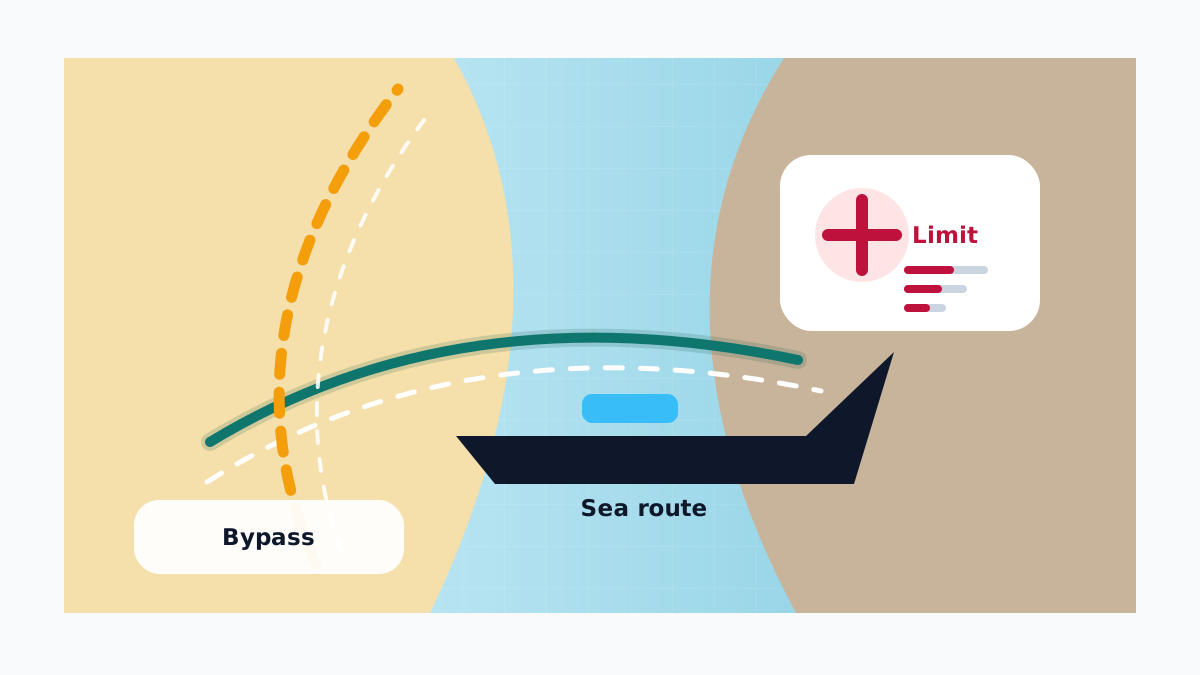
Some alternatives exist. Saudi Arabia and the United Arab Emirates have pipeline infrastructure that can move some oil outside the Strait of Hormuz. EIA and IEA both note that such bypass capacity can reduce risk for part of the flow.
But having alternatives is not the same as being able to replace the full volume quickly and cheaply. Iran, Iraq, Kuwait, Qatar, Bahrain, and others depend heavily on the strait for exports. LNG is especially hard to reroute at scale because it depends on specialized terminals, ships, and contracts.
The key idea is simple:
Some cargoes can be rerouted, but replacing the full flow quickly and cheaply is difficult.
Why can food prices be connected too?
The strait is linked not only to oil and LNG but also to fertilizer-related logistics. Natural gas is a key cost input for ammonia and nitrogen fertilizer production. If gas prices rise, fertilizer production costs can increase, and fertilizer prices can affect agricultural costs.
The pathway is:
Higher natural gas prices
→ higher fertilizer production costs
→ higher agricultural production costs
→ pressure on food prices
UNCTAD has highlighted how energy, fertilizer, and transport shocks can raise risks for food security and cost-of-living pressure, especially in economies that rely heavily on imported energy and food.
Key takeaways
- The Strait of Hormuz is a key route for global crude oil and petroleum products.
- It is also important for LNG exports from Qatar and the United Arab Emirates.
- Alternative routes exist, but they cannot easily replace the full flow.
- Tension around the strait can affect oil prices, gas prices, freight rates, and insurance premiums.
- Those effects can reach inflation, food prices, and global economic growth.
- The Strait of Hormuz is not just a place on a map. It is a core link between energy markets and maritime trade.
Main sources
- EIA, Amid regional conflict, the Strait of Hormuz remains critical oil chokepoint
- EIA, World Oil Transit Chokepoints
- IEA, Strait of Hormuz factsheet
- UNCTAD, Strait of Hormuz disruptions: Implications for global trade and development
- UNCTAD, From gas to grain: Fertilizer disruptions raise risks for food security and trade